

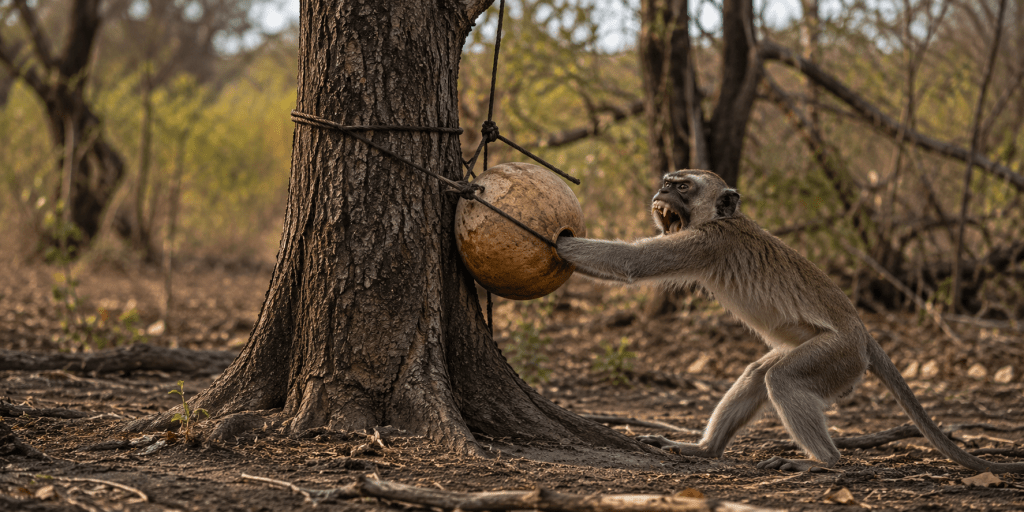
Growing up in southern Africa, I often heard stories from the bush that carried lessons far beyond the animals they described. One of the most memorable involved monkeys and a simple trap.
The trap itself was surprisingly uncomplicated. A hollowed gourd would be secured to a tree and baited with fruit, nuts, or some other tempting food. The opening was carefully cut so that a monkey could easily slip an open hand inside, but once it grabbed the food and closed its hand into a fist, it could no longer pull its hand back out.
At that moment, the monkey faced a choice.
It could release the food and regain its freedom, or it could keep its prize and remain trapped.
What made the trap effective was not the strength of the gourd but the predictability of the response. Time after time, monkeys chose to hold on rather than let go. Freedom was available, but it required surrendering something they desperately wanted to keep.
The prison was not the trap itself. The prison was the grip.
The longer I live, the more I realize that human beings are often not very different.
Most of us can easily identify the things that threaten our freedom from the outside. We can point to difficult circumstances, unfair situations, broken systems, or the actions of others. Yet some of the strongest chains in our lives are not imposed upon us at all. They are things we continue to grip long after they have begun causing harm.
For some people, the food inside the gourd is addiction. It may be drugs, alcohol, gambling, or some other destructive habit that once offered relief, comfort, excitement, or escape. Over time the costs become obvious. Relationships suffer. Opportunities disappear. Health deteriorates. Yet letting go feels impossible because the hand has been clenched around the prize for so long.
For others, the food is resentment. An old betrayal, a deep wound, or an injustice becomes something they carry year after year. What began as pain slowly hardens into identity. The anger becomes familiar, even comforting. The person who caused the injury may have moved on long ago, but the one holding the grudge remains trapped beside the tree.
Sometimes the food is an ideology.
Ideas are powerful things. They help us understand the world and guide our decisions. Yet there are times when an idea becomes so important to our sense of self that we stop examining it honestly. Evidence no longer matters. Questions become threats. Anyone who disagrees becomes an enemy. What once served as a tool for understanding becomes a prison that limits it.
Sometimes the food is a business idea, a product, or a strategy that once brought success. Organizations can become attached to past victories and continue investing in approaches that no longer fit a changing world. Leaders may see the warning signs, declining sales, changing customer expectations, new technologies, or emerging competitors, yet struggle to release what worked in the past. The very idea that once created success can become the thing that prevents future success. Like the monkey gripping the food inside the gourd, businesses can find themselves trapped not by external forces but by an unwillingness to let go of something that has outlived its usefulness.
The same danger exists with political parties and movements. Healthy political engagement is essential in a free society, but blind loyalty can become a trap. When allegiance to a party becomes more important than truth, character, or principle, people find themselves defending actions they would condemn if committed by someone else. They remain trapped not because they cannot leave, but because letting go would require admitting that they have invested too much of themselves in something that no longer deserves their loyalty.
The monkey’s mistake was not reaching into the gourd. The mistake was refusing to release what had become dangerous to hold.
Not everything we hold is harmful. Some beliefs provide direction. Some commitments provide stability. Some relationships provide meaning. The lesson of the monkey’s fist is not that we should let go of everything, but that we should periodically examine what we are holding and why. The question is not whether we have a grip on something. The question is whether that something has begun to gain a grip on us.


Leave a Reply