

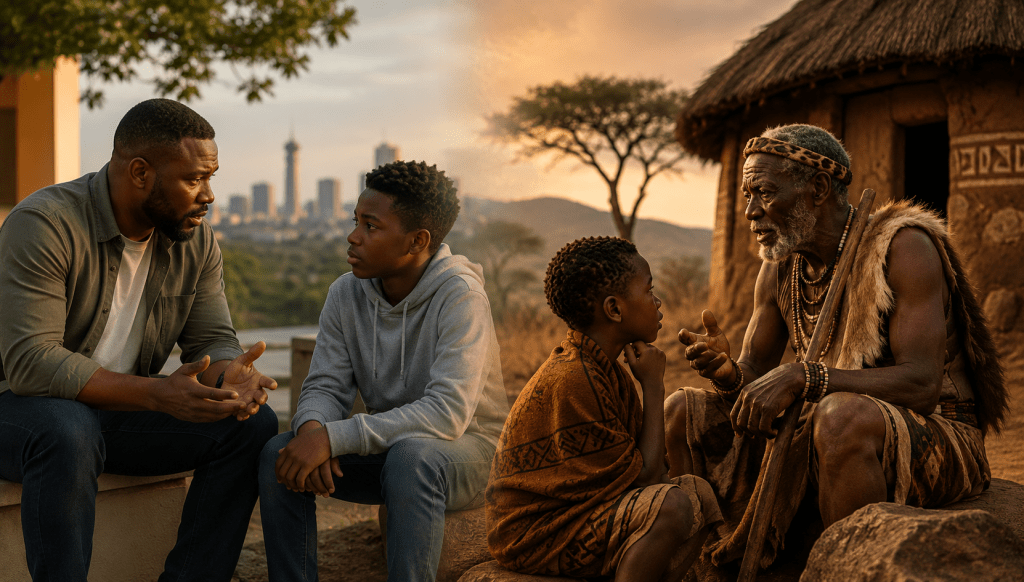
“Those who do not learn from being told learn through bleeding.“
Among the Zulu people of South Africa, there is an old proverb:
Osala ukutshelwa ubona ngomopho.
Literally translated, it means, “The one who does not listen will see through blood.” More naturally, we might say, “Those who do not learn from listening learn from bleeding.”
It is a vivid image, and intentionally so.
The proverb recognizes a simple truth about human nature. We all have opportunities to learn from the experiences, wisdom, and warnings of others. Parents try to pass lessons to their children. Mentors offer guidance to those who are just beginning their journeys. Friends warn us when they see danger ahead. History itself stands as a collection of lessons written by those who came before us.
Yet there is something in many of us that resists learning secondhand. We want to see for ourselves. We convince ourselves that our situation is different, that the warning does not apply to us, or that we can somehow avoid the consequences that others have experienced.
Sometimes we are right.
Often we are not.
The painful reality is that life can be an effective teacher. A strained relationship can teach us the importance of communication. Financial hardship can teach us the value of planning. Failure can teach us humility. Loss can teach us gratitude. The lessons learned through experience are often remembered because they come at a cost.
The proverb is not celebrating suffering. It is lamenting the fact that suffering is sometimes the only lesson we are willing to accept.
As I have grown older, I have come to appreciate that wisdom is one of the few gifts that can be transferred without requiring someone else to pay the same price. Every time we listen to a trusted mentor, every time we learn from history, and every time we pay attention to the experiences of others, we are accepting a gift. We are benefiting from lessons that someone else earned through effort, failure, sacrifice, or pain.
This truth applies not only to individuals but also to organizations, communities, and even nations. We often repeat avoidable mistakes because we fail to learn from those who have already traveled the road before us. We dismiss warnings. We ignore patterns. We assume that this time will somehow be different. Then, when consequences arrive, we act surprised by outcomes that were visible all along.
The challenge for all of us is to decide what kind of learners we want to be.
There are lessons that will inevitably require personal experience. No amount of advice can fully prepare us for grief, parenthood, leadership, love, or disappointment. Some understanding comes only through living.
But many other lessons can be learned by listening.
The Zulu proverb reminds us that every day presents a choice. We can learn through wisdom, or we can learn through wounds. We can learn through listening, or we can learn through bleeding.
The wiser path is usually the less painful one.


Leave a Reply